

laboratory viscometer
A laboratory viscometer is an essential instrument used to measure the viscosity of liquids and semi-liquids in research, quality control, and product development. Viscosity is the property of a fluid that determines its resistance to flow. In simple terms, it describes how thick or thin a liquid is. Accurate viscosity measurement is important in many fields, including chemistry, pharmaceuticals, food and beverage, cosmetics, petroleum, coatings, and materials science.A laboratory viscometer helps scientists and technicians understand the physical behavior of samples under controlled conditions. Different types of viscometers are available, including rotational viscometers, capillary viscometers, falling ball viscometers, and vibrating viscometers. Each type works on a different principle, but all are designed to provide reliable and repeatable measurements. Rotational viscometers are among the most commonly used in laboratories because they can measure a wide range of sample viscosities and are suitable for both Newtonian and non-Newtonian fluids.The basic operation of a laboratory viscometer usually involves placing the sample in a container and allowing the instrument to apply a controlled force or motion. The device then measures the resistance of the liquid to that motion and converts the result into a viscosity value. Modern viscometers often include digital displays, temperature control systems, automatic calibration functions, and data storage features. These improvements make testing easier, faster, and more accurate.Temperature control is especially important in viscosity testing because viscosity changes with temperature. In most cases, liquids become thinner as temperature increases. Therefore, a laboratory viscometer often works together with a thermostatic bath or built-in heating system to ensure consistent test conditions. Accurate temperature control improves the reliability of results and allows comparison between different samples or batches.Laboratory viscometers are widely used for product formulation, process optimization, and quality assurance. In the food industry, they help measure the thickness of sauces, syrups, and dairy products. In pharmaceuticals, they are used to test syrups, creams, and suspensions. In cosmetics, viscosity measurement ensures that lotions, gels, and shampoos have the desired texture and flow behavior. In industrial applications, they support the development of lubricants, paints, adhesives, and polymers.Using a laboratory viscometer offers several advantages. It provides precise measurements, improves consistency in production, and helps detect changes in sample quality. It also assists researchers in studying how materials behave under different shear rates and temperatures. This information is valuable for designing better products and improving manufacturing processes.In conclusion, a laboratory viscometer is a valuable analytical tool for measuring fluid viscosity with accuracy and consistency. Its role in scientific research and industrial testing makes it an important part of modern laboratory work.
Products
Category:
-
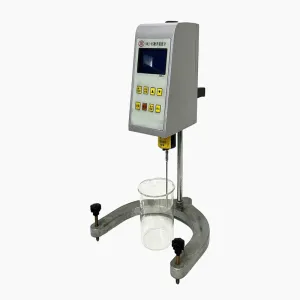
Digital Rotational Viscometer – MRX-NDJ5S
Category: Slurry ViscometersBrowse number: 4Number:Release time: 2026-09-24 19:36:01The MRX-NDJ5S is a precision digital rotational viscometer for laboratory and process-related viscosity measurement. Covering 1–100,000 mPa·s, it combines selectable spindle speeds, RTD temperature monitoring, direct digital readout, and RS232C communication for reliable evaluation of battery slurries and other industrial fluids.
News
Category:
No search results found!
Case
Category:
No search results found!
Video
Category:
No search results found!
Download
Category:
No search results found!
Job
Category:
No search results found!
Featured Products
No search results found!



 Phone
Phone