

Laboratory Planetary Ball Mill
A laboratory planetary ball mill is a high-energy grinding machine designed for the fine reduction, mixing, and homogenization of a wide range of materials. It is widely used in scientific research, material development, ceramics, metallurgy, chemistry, geology, and pharmaceutical studies. The working principle is based on the planetary motion of grinding jars: the jars rotate around their own axes while simultaneously revolving around a central axis. This dual movement generates strong centrifugal forces and repeated impact and friction between the grinding media and the sample, producing very fine particles in a relatively short time.This type of mill is especially suitable for processing hard, brittle, fibrous, or crystalline materials. It can be used for dry grinding as well as wet grinding, depending on the nature of the sample and the desired final product. Common applications include particle size reduction, alloy research, mechanical activation, sample homogenization, and preparation of specimens for analysis. Because of its high energy input, it can achieve nanoscale or near-nanoscale particle sizes for many materials.A laboratory planetary ball mill usually features a compact structure, stable operation, and adjustable speed control. Users can set the rotation speed, grinding time, direction of rotation, and pause intervals according to specific experimental requirements. Some models are equipped with digital displays, programmable timers, safety locks, overload protection, and cooling systems to improve efficiency and ensure safe operation. The grinding jars and balls are available in different materials such as stainless steel, zirconia, agate, tungsten carbide, and nylon, allowing users to minimize contamination and select the best option for each application.One of the main advantages of a laboratory planetary ball mill is its versatility. It can handle small sample quantities while still delivering highly reproducible results. This makes it ideal for research laboratories and pilot-scale experiments where precision and consistency are essential. The sealed grinding jars also help reduce material loss and prevent contamination during the grinding process.In addition, the machine is valued for its efficiency and ease of use. Despite its powerful grinding capability, it is relatively simple to operate and maintain. With proper selection of jars, balls, and process parameters, users can obtain excellent grinding performance and consistent sample quality. For these reasons, the laboratory planetary ball mill has become an important tool in modern experimental and analytical work.If you want, I can also write:1. a more technical version, 2. a marketing-style version, or 3. a version optimized for website product pages.
Products
Category:
-
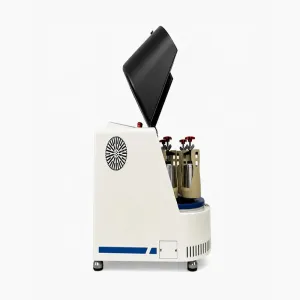
Planetary Ball Mill MRX-XQM-1
Category: Pouch Cell Pilot LineBrowse number: 399Number:Release time: 2026-09-24 19:36:46The Planetary Ball Mill MRX-XQM-1 is a compact four-jar laboratory milling system designed for fine grinding, material mixing, powder preparation, and advanced materials research. Its planetary motion combines revolution and rotation to create intensive milling conditions, while variable-frequency speed control allows researchers to adjust processing parameters according to different materials. With programmable forward and reverse cycles, multiple jar material options, and compatibility with vacuum grinding jars, the system is well suited to battery materials, nanomaterials, ceramics, minerals, and other laboratory-scale material development applications.
News
Category:
No search results found!
Case
Category:
No search results found!
Video
Category:
No search results found!
Download
Category:
No search results found!
Job
Category:
No search results found!
Featured Products
-
NEWS
Planetary Ball Mill MRX-XQM-1
Learn more



 Phone
Phone