

Laboratory Grinding Mill
A laboratory grinding mill is a compact and highly efficient piece of equipment designed for the fine size reduction of various materials in research, testing, and small-scale production environments. It is widely used in laboratories for sample preparation, product development, quality control, and experimental analysis. Its primary function is to grind, pulverize, or homogenize solid materials into smaller particles with controlled and repeatable results. By producing consistent particle sizes, it helps improve the accuracy of subsequent testing and analysis.The structure of a laboratory grinding mill is generally simple yet durable. It usually consists of a grinding chamber, rotating components such as blades, disks, or balls, a feeding system, and a collection container for the processed material. Depending on the model and application, the mill may use different grinding principles, including impact, shear, friction, or attrition. Some mills are designed for dry grinding, while others can handle wet grinding, making them suitable for a wide range of materials and applications.One of the key advantages of a laboratory grinding mill is its ability to handle small sample quantities with high precision. This is especially important in research settings where only limited amounts of material are available. The equipment allows users to test different grinding conditions, such as speed, grinding time, and feeding rate, to determine the best process for a specific material. This flexibility makes it an essential tool in industries such as mining, metallurgy, chemistry, pharmaceuticals, food processing, ceramics, and environmental science.Modern laboratory grinding mills are often designed with user safety and convenience in mind. Many models include sealed chambers to reduce dust exposure, overload protection to prevent motor damage, and easy-to-clean components to avoid cross-contamination between samples. Some machines also offer adjustable settings, digital controls, and transparent covers for better observation during operation. These features not only improve performance but also make the equipment easier and safer to use.Another important feature of a laboratory grinding mill is its role in improving material uniformity. In many scientific and industrial applications, the physical characteristics of a sample must be controlled before further testing can be performed. Grinding helps break down large particles and create a more uniform sample, which leads to more reliable analytical results. This is particularly valuable in applications such as X-ray analysis, chemical composition testing, particle size distribution studies, and material characterization.In addition to performance and precision, laboratory grinding mills are valued for their compact size and energy efficiency. Because they are intended for laboratory use, they occupy relatively little space and consume less power than large industrial mills. Despite their smaller scale, they are capable of delivering excellent grinding performance for a wide variety of materials, including brittle, hard, fibrous, or soft substances.In summary, a laboratory grinding mill is an indispensable tool for sample preparation and material processing. It combines precision, versatility, safety, and efficiency in a compact design. Whether used in scientific research or industrial testing, it plays a vital role in achieving accurate, consistent, and reproducible results.
Products
Category:
-
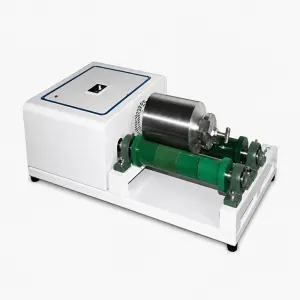
Laboratory Roller Ball Mill MRX-QM-2
Category: Planetary Ball MillsBrowse number: 4Number:Release time: 2026-09-24 19:36:52The Laboratory Roller Ball Mill MRX-QM-2 is a compact grinding and mixing solution developed for laboratory research, process development, teaching, testing, and small-batch material preparation. Its adjustable roller speed allows users to adapt the grinding process to different materials and experimental requirements. The machine supports both dry and wet grinding and allows convenient replacement of grinding jars, making it suitable for flexible laboratory workflows where repeatability, space efficiency, and easy operation are important.
News
Category:
No search results found!
Case
Category:
No search results found!
Video
Category:
No search results found!
Download
Category:
No search results found!
Job
Category:
No search results found!
Featured Products
No search results found!



 Phone
Phone