

laboratory battery electrode punch
A laboratory battery electrode punch is a specialized tool used to cut precise circular or rectangular pieces from electrode sheets for battery research and testing. It is an essential instrument in the preparation of coin cells, pouch cells, and other small-format electrochemical devices. By producing electrodes with accurate dimensions and clean edges, the punch helps ensure consistency in experimental results and improves the reliability of battery performance evaluation.In a typical laboratory setting, electrode materials such as lithium-ion cathode and anode sheets are coated onto metal foils and then dried, calendared, and cut into test samples. The electrode punch is used at the final shaping stage to create disks or other standard geometries that match the requirements of the cell assembly process. Because laboratory studies often depend on very small variations in electrode size and mass, this tool plays an important role in maintaining repeatability and precision.Most laboratory electrode punches are designed for ease of use, durability, and accuracy. They are usually made from hardened steel or other wear-resistant materials to withstand repeated cutting of metallic foils and coated composites. The cutting edge is engineered to remain sharp over long periods, reducing deformation and minimizing burrs around the sample edge. A well-made punch produces smooth, uniform samples that are easier to handle during cell assembly and less likely to cause short circuits or alignment problems.One of the main advantages of a laboratory battery electrode punch is its ability to improve sample uniformity. In battery research, even small differences in electrode area can affect current density, capacity calculations, and cycle performance. Using a punch allows researchers to prepare many samples with identical dimensions, which is especially important when comparing materials, evaluating coatings, or conducting statistical studies. This consistency supports more accurate data analysis and better experimental reproducibility.The tool is also valued for its simplicity and efficiency. Laboratory personnel can quickly cut multiple samples from a large sheet, reducing material waste and saving time during preparation. Some punches are operated manually, while others may be mounted in a bench-top setup for greater convenience. In either case, the operation is straightforward: the electrode sheet is placed under the cutting die, pressure is applied, and the sample is extracted cleanly.Safety and cleanliness are important considerations when using an electrode punch. Because battery electrodes may be fragile, sensitive to contamination, or coated with active materials that must remain intact, the cutting process should avoid excessive force and debris generation. Regular cleaning and maintenance help preserve the sharpness of the cutting surfaces and prevent contamination between samples. In moisture-sensitive battery laboratories, the punch may be used inside a dry room or glove box to protect materials from air and humidity.Laboratory battery electrode punches are widely used in academic research, quality control, and prototype development. They support material testing, coin cell fabrication, and performance comparison across different electrode formulations. Their role may seem simple, but they are fundamental to the preparation of high-quality test samples and the success of battery experiments.In summary, a laboratory battery electrode punch is a precise, durable, and practical tool that helps researchers prepare consistent electrode samples for electrochemical testing. Its accuracy, efficiency, and reliability make it an important part of modern battery laboratory work.
Products
Category:
-
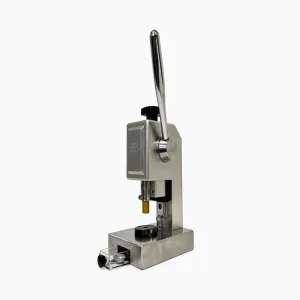
Coin Cell Electrode Punching Machine – MRX-CP60
Category: Slitting MachinesBrowse number: 7Number:Release time: 2026-09-24 19:36:58The MRX-CP60 is a compact precision punching machine for preparing circular electrode and separator samples used in coin cell research. Supporting battery materials from 0.005 to 0.5 mm thick and punching diameters from 3 to 24 mm, it combines guided punching accuracy, a corrosion-resistant aluminum body, and glove-box transfer compatibility.
News
Category:
No search results found!
Case
Category:
No search results found!
Video
Category:
No search results found!
Download
Category:
No search results found!
Job
Category:
No search results found!
Featured Products
No search results found!



 Phone
Phone