Product Introduction
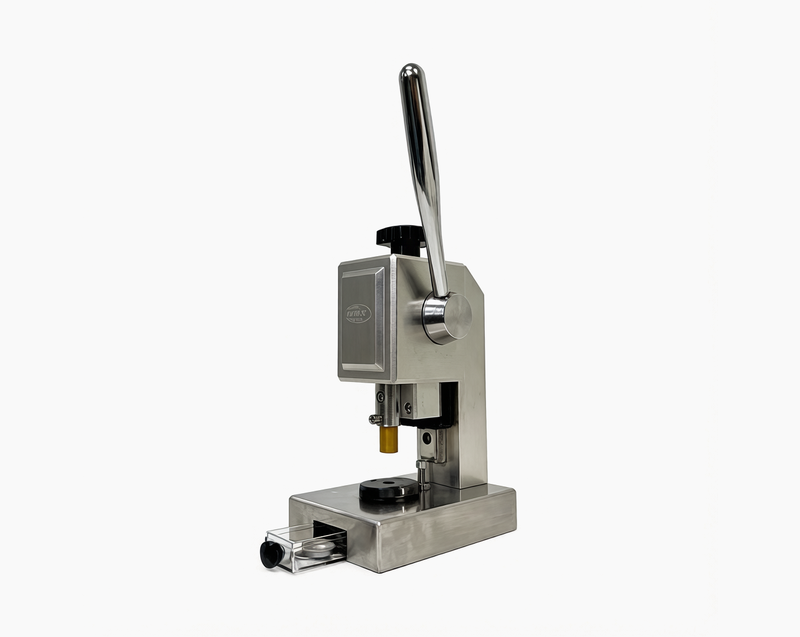
The coin cell electrode punching machine – MRX-CP60 is a compact precision punching system designed for preparing circular samples from thin Battery Materials. It is particularly suitable for laboratory coin cell fabrication, where electrode sheets and separator materials need to be converted into accurately sized discs before cell assembly.
The MRX-CP60 uses a precision guided upper punch structure to maintain stable movement during the punching cycle. This design helps produce clean punched edges while reducing common defects such as burrs, uneven cutting, and unwanted impressions. With interchangeable dies available in different diameters, the machine can be configured for specific experimental sample dimensions.
The equipment is designed to process battery material sheets with thicknesses from 0.005 to 0.5 mm. The available punching diameter can be specified between Φ3 mm and Φ24 mm according to the customer's required sample size. This makes the unit suitable for preparing electrode and separator samples for different coin cell configurations and laboratory testing requirements.
A major advantage of the MRX-CP60 is its compact form factor. With dimensions of only 125 × 145 × 245 mm, the machine can be transferred through a glove box transfer chamber with a diameter of 210 mm or larger. This makes it particularly useful for laboratories that require electrode sample preparation inside or around controlled-atmosphere environments.
The machine body is manufactured from aluminum alloy, providing a lightweight and corrosion-resistant external structure that is suitable for laboratory environments. An anti-static ABS collection box is included to receive punched materials and facilitate removal of processing waste. The straightforward mechanical design also supports convenient operation, cleaning, and routine maintenance.
Key Specifications & Parameters
Product Model: MRX-CP60
Equipment Type: Coin cell electrode punching machine
Punching Diameter: Φ3–Φ24 mm, selectable according to customer requirements
Punching Pressure: ≥300 kg
Punch Stroke: ≥25 mm
Applicable Material Thickness: 0.005–0.5 mm
Applicable Materials: Battery cathode sheets, anode sheets, separators, and other suitable thin battery materials
Overall Dimensions: 125 × 145 × 245 mm (L × W × H)
Glove Box Transfer Compatibility: Suitable for transfer chambers with a diameter of Φ210 mm or larger
Equipment Weight: Approximately 10 kg
Body Material: Aluminum alloy
Collection Box: Anti-static ABS material with waste material discharge function
Included Tool: One M5 wrench
Core Features
Precision Guided Punching: The upper punch is guided by a high-precision linear guide structure, helping maintain stable alignment throughout the punching operation and supporting accurate sample preparation.
Clean Cutting Performance: The guided punching mechanism is designed to produce clean circular samples while minimizing burrs, edge damage, and unwanted surface impressions.
Wide Material Thickness Range: The machine can process battery material sheets from 0.005 to 0.5 mm thick, covering a broad range of thin electrode and separator materials used in laboratory research.
Interchangeable Punching Dies: Punching diameters from Φ3 to Φ24 mm can be configured according to customer requirements, allowing the same machine platform to support different coin cell sample sizes.
High Punching Force: With a specified punching pressure of at least 300 kg, the MRX-CP60 provides sufficient mechanical force for controlled punching of suitable thin battery materials.
Glove Box Transfer Friendly: The compact dimensions allow the equipment to pass through transfer chambers with an internal diameter of Φ210 mm or greater, supporting workflows involving controlled-atmosphere battery laboratories.
Corrosion-Resistant Aluminum Body: The aluminum-alloy housing provides a rust-resistant structure with a clean appearance and practical durability for laboratory operation.
Anti-Static Material Collection: The supplied ABS collection box helps collect punched material and processing waste while providing a practical solution for sample handling and waste removal.
Main Functions
Electrode Disc Punching: The primary function of the MRX-CP60 is to punch circular samples from battery electrode sheets for use in coin cell assembly and laboratory testing.
Separator Sample Cutting: Suitable separator materials can also be punched into defined circular dimensions when preparing components for coin cell experiments.
Battery Material Sample Preparation: The machine converts thin sheet materials into consistent sample geometries, providing a repeatable preparation step for laboratory battery research.
Coin Cell Electrode Preparation: Researchers can prepare cathode and anode discs with specified diameters before assembling coin cells for electrochemical testing.
Multi-Size Disc Preparation: Interchangeable dies allow different punching diameters to be selected according to the requirements of individual battery cell designs and experiments.
Controlled Laboratory Punching: The precision guide mechanism and defined punching stroke provide a controlled mechanical process that is more repeatable than manual cutting methods.
Specific Application Scenarios
Coin Cell Assembly Laboratories: The MRX-CP60 can be used to prepare circular cathode, anode, and separator samples before coin cell assembly, making it a practical component of a laboratory coin cell fabrication workflow.
Lithium-Ion Battery Research: Battery researchers can use the machine to prepare electrode discs for electrochemical testing, material comparison, and cell performance evaluation.
Cathode Electrode Preparation: Coated cathode sheets can be punched into defined circular dimensions for subsequent coin cell assembly and electrochemical characterization.
Anode Electrode Preparation: The same punching process can be applied to suitable anode sheets when consistent electrode geometry is required for laboratory cell construction.
Battery Separator Preparation: Thin separator materials can be cut into circular samples using an appropriate die configuration for coin cell experimental assembly.
Glove Box Battery Assembly: Because the compact machine can pass through a Φ210 mm or larger transfer chamber, it can be incorporated into laboratory workflows involving glove boxes and controlled-atmosphere environments.
Battery Material Screening: Researchers testing different electrode formulations can use the machine to prepare consistently sized samples for comparative electrochemical experiments.
University and Research Institute Laboratories: Its small footprint and flexible die configuration make the MRX-CP60 suitable for academic battery laboratories, material research centers, and experimental cell fabrication facilities.
FAQ
1. What is the MRX-CP60 mainly used for?
The MRX-CP60 is mainly used to punch circular samples from thin battery materials. Typical applications include preparing cathode sheets, anode sheets, and separators for coin cell assembly and laboratory testing.
2. What thickness of battery material can the machine process?
The specified applicable material thickness is 0.005–0.5 mm, covering many thin electrode and separator materials used in laboratory battery research.
3. What punching diameters are available?
The punching diameter can be configured from Φ3 mm to Φ24 mm according to the customer's specified sample size. Different dies can be selected for different experimental requirements.
4. Can the MRX-CP60 punch both positive and negative electrode sheets?
Yes. The machine can be used for suitable cathode and anode sheet materials within the specified thickness range. The appropriate punching die should be selected according to the required electrode diameter.
5. Can it be used to prepare battery separator discs?
Yes. Suitable separator materials within the applicable thickness range can be punched into circular samples for coin cell assembly and related laboratory experiments.
6. What is the punching pressure of the machine?
The specified punching pressure is at least 300 kg, providing the mechanical force required for punching suitable thin battery materials.
7. Is the MRX-CP60 compatible with a glove box workflow?
Yes. Its compact 125 × 145 × 245 mm structure allows the machine to pass through a glove box transfer chamber with a diameter of Φ210 mm or larger, making it suitable for controlled-atmosphere laboratory workflows.
8. What material is used for the machine body?
The machine body is made from aluminum alloy. This provides a corrosion-resistant and rust-resistant structure suitable for laboratory environments.
9. What is the function of the collection box?
The supplied anti-static ABS collection box receives punched samples and residual material. Its waste discharge design makes material collection and cleanup more convenient.
10. Can different punching dies be supplied?
Yes. The machine can be configured with different punching dies according to the required diameter between Φ3 mm and Φ24 mm, allowing it to support different coin cell sample dimensions.



 Phone
Phone