

Lab Vacuum Mixer
A lab vacuum mixer is a specialized piece of equipment designed to blend, disperse, and de-aerate materials under controlled vacuum conditions. It is widely used in laboratory and pilot-scale settings where precise mixing quality is essential and where the removal of trapped air is critical to product performance. By combining vacuum technology with efficient mixing mechanics, this equipment helps produce homogeneous samples with improved consistency, reduced porosity, and better overall stability.The primary function of a lab vacuum mixer is to mix liquid, paste, or highly viscous materials while simultaneously eliminating air bubbles and dissolved gases. During conventional mixing, air can be introduced into the material, which may lead to defects such as foaming, voids, poor surface finish, or inaccurate test results. A vacuum mixer prevents these issues by operating in a sealed chamber where air is removed before or during the mixing process. This makes it especially valuable in applications that require high purity, repeatability, and strong process control.A typical lab vacuum mixer includes a mixing vessel, a vacuum chamber or sealed lid, a stirring system, and a control panel. Depending on the model, it may feature adjustable speed settings, programmable mixing cycles, temperature control, or precision vacuum regulation. These functions allow users to customize the process according to the properties of the material being processed. Some materials require slow, gentle mixing to avoid excessive shear, while others benefit from high-speed dispersion to break down agglomerates and achieve uniformity.Lab vacuum mixers are commonly used in industries such as pharmaceuticals, cosmetics, polymers, electronics, chemical research, and materials science. In pharmaceutical development, they help prepare suspensions, gels, ointments, and other formulations that must be free of air pockets. In cosmetics, they are used for creams, lotions, and emulsions where texture and appearance are important. In advanced materials research, they assist in preparing adhesives, resins, pastes, and composite mixtures for testing and prototype development.One of the major advantages of a lab vacuum mixer is its ability to improve product quality and experimental reliability. Removing air from a sample can enhance density, strength, and appearance while also ensuring more accurate measurement and more reproducible results. For researchers and product developers, this means fewer defects, better data, and faster optimization of formulations. In addition, vacuum mixing can reduce waste by minimizing splashing, spillage, and rework caused by trapped air.Another important benefit is the equipment’s versatility. Many lab vacuum mixers are designed to handle a wide range of viscosities and batch sizes, making them suitable for both small experimental samples and larger development batches. Their compact size also makes them appropriate for laboratory environments where space is limited. Modern units are often designed with user safety and ease of cleaning in mind, featuring durable materials, transparent lids, and simple operation.Overall, a lab vacuum mixer is an essential tool for any laboratory that requires high-quality mixing and reliable deaeration. It supports better formulation development, more consistent material properties, and improved process efficiency. By combining mixing and vacuum functions in one system, it provides a practical and effective solution for many scientific and industrial applications.
Products
Category:
-
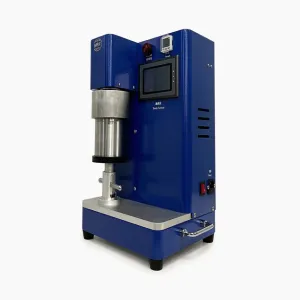
Small Planetary Vacuum Mixer — MRX-XJB-4
Category: Vacuum MixersBrowse number: 4Number:Release time: 2026-09-24 19:37:16The MRX-XJB-4 Small Planetary Vacuum Mixer is a compact laboratory mixing solution developed for preparing high-quality battery slurries and other demanding material formulations. Its integrated planetary mixing and vacuum operation help reduce entrapped air during processing, while programmable multi-speed control provides greater flexibility for different material viscosities and mixing stages. With a compact footprint, built-in vacuum system and interchangeable stainless-steel mixing containers, it is particularly suitable for battery research, small-batch material development and laboratory-scale formulation work.
News
Category:
No search results found!
Case
Category:
No search results found!
Video
Category:
No search results found!
Download
Category:
No search results found!
Job
Category:
No search results found!
Featured Products
No search results found!



 Phone
Phone