

battery electrode stacking machine
A battery electrode stacking machine is a specialized piece of equipment used in the production of lithium-ion batteries and other advanced electrochemical cells. Its main function is to accurately stack positive and negative electrode sheets, along with separator material, into a precise layered structure before the cells move to the next stage of assembly. This process is essential because the quality of stacking directly affects battery performance, safety, consistency, and overall manufacturing efficiency.The machine is designed to handle electrode sheets with high precision and repeatability. During operation, the positive electrode, negative electrode, and separator are fed into the equipment through separate loading mechanisms. The machine then aligns each layer according to preset dimensions and positioning parameters. By controlling placement accuracy, it minimizes misalignment, reduces material waste, and helps ensure stable cell performance. In modern battery manufacturing, even a very small stacking error can influence internal resistance, capacity, and cycle life, so precision is a key requirement.There are several stacking methods used in these machines, including Z-fold stacking, alternating stacking, and sheet-to-sheet stacking. The chosen method depends on the battery cell design and production requirements. For example, Z-fold stacking is often used for pouch cells because it allows the separator to be folded between layers efficiently. Sheet-to-sheet stacking, on the other hand, may be preferred for certain prismatic or custom cell formats. Regardless of the method, the machine must maintain smooth material handling and stable tension control to avoid damage to delicate electrode surfaces.A battery electrode stacking machine typically includes a feeding system, alignment system, stacking platform, vision inspection unit, control system, and unloading mechanism. The feeding system delivers materials continuously or intermittently. The alignment system ensures that each electrode is placed in the correct position. Vision inspection may be used to detect defects, verify orientation, and confirm dimensional accuracy. The control system coordinates all movements and allows operators to adjust parameters such as speed, spacing, and stacking count. Advanced models may also include automatic error detection, alarm functions, and data recording for quality traceability.Automation is one of the major advantages of using this machine. Compared with manual stacking, automated stacking significantly improves production speed, consistency, and labor efficiency. It also reduces the risk of contamination and human error, which is especially important in battery manufacturing environments that require clean and controlled conditions. In addition, the machine can support large-scale mass production while maintaining a high level of repeatability.Maintenance and reliability are also important considerations. Since the equipment operates with thin and sensitive materials, regular cleaning, calibration, and inspection are necessary to ensure stable performance. Wear parts such as rollers, belts, and suction components must be checked frequently. Proper maintenance helps extend machine life and keeps product quality consistent.In summary, a battery electrode stacking machine is a critical device in modern battery production. It combines precision, automation, and efficiency to create accurately stacked electrode assemblies. As demand for high-performance batteries continues to grow, this equipment plays an increasingly important role in supporting safe, reliable, and scalable manufacturing.
Products
Category:
-
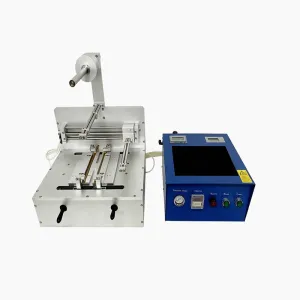
Semi-Automatic Battery Electrode Stacking Machine – MRX-BDP200-A
Category: Stacking MachinesBrowse number: 7Number:Release time: 2026-09-24 18:39:36The MRX-BDP200-A is a benchtop semi-automatic stacking machine developed for lithium-ion battery electrode assembly. It uses controlled separator tension and reciprocating movement to create a Z-fold stacking pattern, supporting electrode sizes from 20 × 20 mm up to 200 × 200 mm. Its compact footprint, simple controls, foot-operated pneumatic mechanism, and digital cycle counter make it well suited to battery prototyping, laboratory development, and small-batch cell production.
News
Category:
No search results found!
Case
Category:
No search results found!
Video
Category:
No search results found!
Download
Category:
No search results found!
Job
Category:
No search results found!
Featured Products
-
NEWS
Semi-Automatic Battery Electrode Stacking Machine – MRX-BDP200-A
Learn more



 Phone
Phone