MRX-TMH250 Automatic Film Coating and Drying Machine
Product Introduction
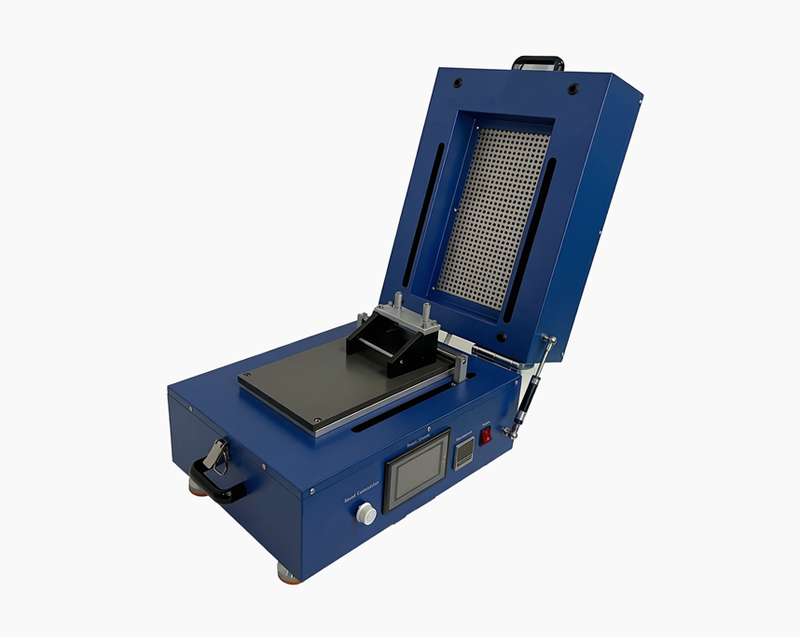
The MRX-TMH250 Automatic Film Coating and Drying Machine is a laboratory coating platform developed for researchers who need controlled and repeatable film application on sheet-type substrates. Rather than relying on manual coating methods, the system provides adjustable coating movement and a stable substrate-holding surface to support consistent experimental results.
For lithium-ion battery research, the MRX-TMH250 can be used to prepare laboratory-scale electrode coatings before subsequent drying, calendaring, cutting, and cell assembly processes. The adjustable coating speed and coating gap allow researchers to investigate different slurry formulations and coating conditions during electrode development.
The machine supports several coating methods, including doctor blade coating, four-sided applicator coating, and wire rod coating. This flexibility enables researchers to select a coating approach according to the material formulation, substrate, and experimental objective.
An integrated heating and drying system provides controlled thermal treatment after coating. Temperature can be digitally monitored and adjusted, helping researchers evaluate how drying conditions influence the appearance and quality of the coated layer.
With a maximum coating stroke of 250 mm and coating speeds from 0 to 100 mm/s, the MRX-TMH250 is designed for laboratory and research environments where coating process parameters need to be adjusted frequently. Its vacuum aluminum plate also helps hold the substrate securely during coating and allows convenient loading and removal of test samples.
Key Specifications & Parameters
Model: MRX-TMH250
Power Supply: 220 V / 50 Hz
Coating Speed: 0–100 mm/s, adjustable
Maximum Coating Stroke: 250 mm
Vacuum Aluminum Plate: 365 × 200 × 32 mm
Coating Gap Adjustment: 0.01–3.5 mm
Rated Power: 1,000 W
Overall Dimensions: 570 × 420 × 370 mm
Equipment Weight: 50 kg
Drying System: Integrated heating and drying system; customized configurations are available according to application requirements.
Core Features
Adjustable Coating Speed
The coating speed can be continuously adjusted from 0 to 100 mm/s, giving researchers greater flexibility when comparing different coating conditions and material formulations.
Multiple Coating Methods
The platform can accommodate doctor blade coating, four-sided film applicators, and wire rod coating methods. This makes it suitable for different laboratory coating experiments rather than limiting the user to a single application technique.
Adjustable Coating Gap
The coating gap can be adjusted from 0.01 to 3.5 mm, allowing researchers to investigate different wet-film thickness conditions during material and electrode development.
Vacuum Aluminum Holding Plate
The vacuum aluminum plate provides a stable surface for positioning sheet substrates during coating. Its design also allows test samples to be placed and removed conveniently between experiments.
Integrated Heating and Drying
The built-in heating and drying system allows coated samples to receive thermal treatment after application. Digital temperature control supports more consistent drying conditions during laboratory experiments.
Compact Laboratory Configuration
With overall dimensions of 570 × 420 × 370 mm, the MRX-TMH250 provides a practical configuration for research laboratories that require controlled coating and drying without installing a large-scale production coater.
Main Functions
Laboratory Electrode Coating
The MRX-TMH250 can be used to apply battery electrode slurry onto suitable sheet substrates during lithium-ion battery research. The adjustable coating parameters support experimental comparison of different electrode formulations and process conditions.
Controlled Film Application
The machine provides controlled movement during film application, helping researchers establish repeatable coating conditions when evaluating coating materials and formulations.
Coating Thickness Development
By adjusting the coating gap and coating speed, users can investigate different wet-film thickness conditions and their effects on the final coated layer.
Thermal Drying of Coated Films
The integrated drying system provides heating after coating, allowing researchers to study the relationship between drying conditions and coating appearance or material performance.
Functional Film Preparation
In addition to battery electrodes, the platform can support laboratory coating studies involving ceramic films, inks, adhesives, and other functional coating materials.
Specific Application Scenarios
Lithium-Ion Battery Electrode Research
The MRX-TMH250 can be integrated into laboratory battery electrode preparation workflows. Researchers can coat cathode or anode slurry onto appropriate substrates before drying and subsequent electrode processing.
Battery Material Formulation Evaluation
When evaluating different active materials, binders, conductive additives, or slurry compositions, researchers can use controlled coating conditions to compare the resulting electrode surfaces and film characteristics.
Electrode Process Development
The adjustable coating speed and gap allow laboratories to investigate how coating parameters influence electrode thickness, surface appearance, and downstream processing performance.
Ceramic Film Research
The equipment can be used for laboratory preparation of ceramic films where controlled application and subsequent thermal drying are required.
Functional Thin-Film Development
Researchers working with functional coatings can use different coating tools and adjustable process parameters to evaluate film formation and surface quality.
Ink and Adhesive Coating Research
The MRX-TMH250 is also suitable for laboratory studies involving inks, adhesives, and other liquid or slurry-based coating materials that require controlled film application.
University and Research Institute Laboratories
The machine is well suited to universities, battery research centers, materials laboratories, and research institutes that require flexible coating and drying capabilities for small-scale experiments.
Frequently Asked Questions
1. What is the MRX-TMH250 used for?
The MRX-TMH250 is a laboratory automatic film coating and drying machine used to apply liquid or slurry materials onto sheet-type substrates. It is particularly suitable for battery electrode research, ceramic films, inks, adhesives, and functional coatings.
2. Can the MRX-TMH250 be used for lithium-ion battery electrodes?
Yes. The machine can be used for laboratory-scale cathode and anode electrode coating research. It can be incorporated into a workflow that includes slurry preparation, coating, drying, calendaring, electrode cutting, and cell assembly.
3. What coating methods are supported?
The machine supports several laboratory coating methods, including doctor blade coating, four-sided applicator coating, and wire rod coating. The appropriate coating method depends on the material and experimental requirements.
4. What is the maximum coating speed?
The coating speed can be adjusted from 0 to 100 mm/s, allowing researchers to compare different coating rates during process development.
5. What is the maximum coating stroke?
The maximum coating stroke is 250 mm. The actual working stroke can be adjusted within the available range using the stroke limit switches.
6. Can the coating gap be adjusted?
Yes. The coating gap can be adjusted from 0.01 to 3.5 mm, giving researchers flexibility when developing different film thickness conditions.
7. Does the machine include a drying system?
Yes. The MRX-TMH250 is equipped with a heating and drying system with digital temperature control. Customized drying configurations can also be provided according to specific customer requirements.
8. What is the purpose of the vacuum aluminum plate?
The vacuum aluminum plate helps hold the substrate securely during coating and allows the coated sheet to be positioned and removed conveniently between laboratory experiments.
9. Is the MRX-TMH250 suitable for university battery laboratories?
Yes. Its laboratory-scale format, adjustable coating parameters, and integrated drying function make it suitable for universities, research institutes, and battery development laboratories.
10. Can the drying system be customized?
Yes. The standard machine includes a heating and drying system, and customized configurations can be considered according to the customer's process requirements.



 Phone
Phone