Product Introduction
The Electric Battery Electrode Slitting Machine MRX-FT300 is a precision electrode processing system developed for longitudinal cutting of lithium-ion battery electrode sheets after coating, drying, and calendering. It converts processed electrode material into narrower strips according to the dimensional requirements of subsequent cell assembly, helping establish consistent electrode widths for downstream battery manufacturing operations.
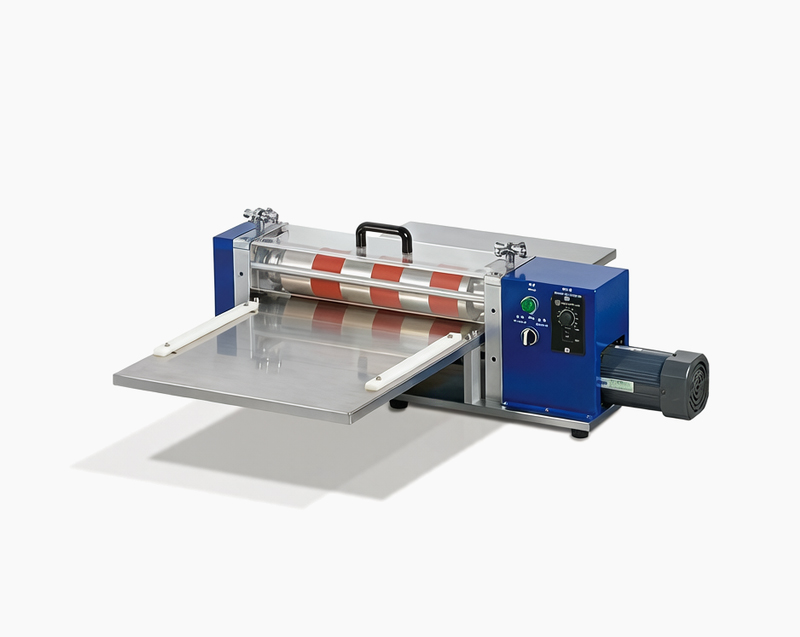
The MRX-FT300 uses an upper-and-lower circular knife configuration for synchronized roller slitting. During operation, the two cutting wheels rotate at the same speed and work together to separate the electrode sheet along the required cutting lines. This configuration is designed to provide a stable cutting process while maintaining clean and consistent edges.
An adjustable feeding guide helps position the electrode material before it reaches the cutting section. This allows operators to establish a suitable feeding path according to the required strip width and electrode format. The engagement between the upper and lower knives can also be adjusted to accommodate different electrode processing conditions.
The machine is designed for battery electrode sheets with thicknesses from 80 to 300 μm and supports cutting widths from 20 to 300 mm. With an adjustable maximum slitting speed of 4 m/min, the MRX-FT300 provides practical processing flexibility for laboratory and small-scale battery electrode preparation.
To improve operating safety, the cutting area is equipped with a transparent protective cover that allows operators to observe the cutting mechanism while reducing direct exposure to the rotating knives. The open-style knife mounting structure also simplifies knife removal and replacement during equipment maintenance and process adjustment.
The MRX-FT300 is particularly suitable for battery research laboratories, pilot-scale electrode preparation, and cell development facilities where coated electrode materials need to be converted into accurately sized strips before winding, stacking, or other cell assembly operations.
Key Specifications & Parameters
Product Name: Electric Battery Electrode Slitting Machine
Model: MRX-FT300
Cutting Method: Upper and lower circular knives
Applicable Cutting Width: 20–300 mm
Applicable Electrode Thickness: 80–300 μm
Maximum Slitting Speed: 4 m/min, adjustable
Knife Diameter: 85 mm
Specified Burr Level: ≤25 μm
Power Supply: AC 220 V / 50 Hz
Rated Power: 200 W
Overall Dimensions: 850 × 920 × 400 mm
Equipment Weight: 79 kg
Core Features
Synchronized Circular Knife Slitting
The upper and lower circular knives operate at synchronized speed to provide controlled rolling-cut action. This cutting configuration is designed for stable separation of coated battery electrode sheets.
Adjustable Feeding Guide
The adjustable guide mechanism helps position incoming electrode material before slitting, supporting repeatable feeding alignment and more consistent strip dimensions.
Adjustable Knife Engagement
The knife engagement can be adjusted according to the electrode material and processing requirements, providing greater flexibility when working with different sheet conditions.
Clean Edge Processing
The precision slitting structure is designed to produce controlled electrode edges, with a specified burr level of ≤25 μm under the applicable processing conditions.
Protective Cutting Cover
A transparent protective cover surrounds the cutting section, allowing operators to monitor the slitting process while improving protection around the rotating knife assembly.
Convenient Knife Replacement
The open-style knife mounting structure provides convenient access to the circular cutting components, simplifying knife removal and replacement during maintenance or process changes.
Compact Equipment Design
The compact footprint makes the MRX-FT300 suitable for battery laboratories and R&D facilities where electrode processing capability is required without occupying excessive floor space.
Main Functions
Battery Electrode Sheet Slitting
The primary function of the MRX-FT300 is to divide coated battery electrode sheets into narrower strips according to the dimensional requirements of a specific battery design or cell assembly process.
Electrode Width Control
The machine supports cutting widths from 20 to 300 mm, allowing researchers and operators to configure electrode strip dimensions for different cell formats and experimental requirements.
Post-Calendering Electrode Processing
The MRX-FT300 can be positioned after electrode coating, drying, and calendering within a battery R&D workflow. It prepares the processed electrode sheet for subsequent cell assembly operations.
Precision Edge Cutting
The synchronized circular knife system is designed to produce consistent longitudinal cuts with controlled edge quality, which is important when electrode strips are subsequently used in cell assembly.
Adjustable-Speed Slitting
The slitting speed can be adjusted up to a maximum of 4 m/min, allowing the operator to select a suitable processing speed according to material characteristics and experimental requirements.
Specific Application Scenarios
Lithium-Ion Battery R&D
The MRX-FT300 is suitable for lithium-ion battery laboratories that need to prepare coated electrode sheets for subsequent cell fabrication. Researchers can use the machine to establish controlled electrode widths for different experimental cell designs.
Battery Pilot Lines
Within a battery pilot line, the slitting machine can serve as a downstream electrode processing unit after coating, drying, and calendering. It prepares the electrode material for further cutting, stacking, winding, or cell assembly operations.
Electrode Process Development
Battery researchers can use the adjustable cutting width and speed to investigate different electrode formats and optimize material preparation procedures before cell assembly.
Cell Assembly Preparation
Accurately sized electrode strips are essential for many cell assembly processes. The MRX-FT300 prepares electrode material according to required width specifications before it enters downstream assembly operations.
University and Research Institute Laboratories
Its compact construction and adjustable processing parameters make the machine suitable for university battery laboratories, research institutes, corporate R&D centers, and other facilities conducting experimental electrode preparation.
Frequently Asked Questions
1. What is the MRX-FT300 used for?
The MRX-FT300 is an electric battery electrode slitting machine designed to divide coated and calendered lithium-ion battery electrode sheets into narrower strips for downstream cell assembly.
2. What type of cutting mechanism does the machine use?
The machine uses an upper-and-lower circular knife configuration. Both knives operate synchronously to provide controlled roller slitting of the electrode sheet.
3. What electrode thickness can the MRX-FT300 process?
The specified applicable electrode thickness range is 80–300 μm. Actual processing performance may depend on electrode composition, substrate characteristics, and process conditions.
4. What cutting width range is supported?
The applicable cutting width range is 20–300 mm, allowing the machine to accommodate different electrode formats used in battery R&D and cell development.
5. What is the maximum slitting speed?
The maximum slitting speed is 4 m/min, and the operating speed can be adjusted according to the electrode material and required processing conditions.
6. How does the MRX-FT300 help maintain cutting alignment?
An adjustable feeding guide helps position the electrode sheet before it reaches the circular knives, supporting stable feeding alignment during the slitting process.
7. Can the knife engagement be adjusted?
Yes. The engagement between the upper and lower circular knives can be adjusted to suit different electrode processing requirements.
8. What burr level can the machine achieve?
The specified burr condition is ≤25 μm. Final edge quality can vary depending on electrode material, thickness, knife condition, setup, and operating parameters.
9. Is the machine suitable for battery R&D laboratories?
Yes. Its compact design, adjustable slitting width, variable speed, and relatively low power requirement make it suitable for battery R&D and laboratory electrode preparation environments.
10. Where does electrode slitting fit in the battery manufacturing process?
Electrode slitting is generally performed after coating, drying, and calendering. The resulting electrode strips can then proceed to subsequent processes such as electrode cutting, stacking, winding, or cell assembly, depending on the battery design.



 Phone
Phone