Hydraulic Roll-to-Roll Calendering Machine MRX-DG300
Product Introduction
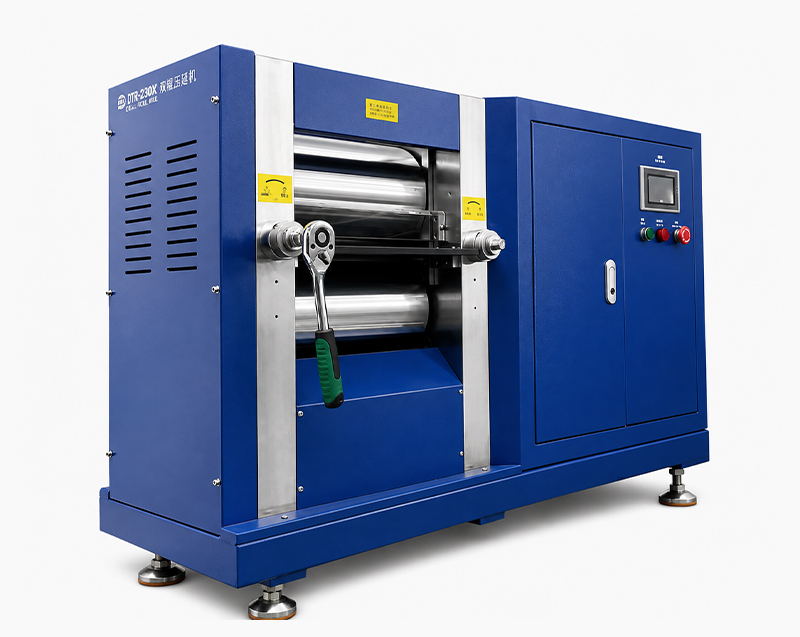
The Hydraulic Calendering Machine MRX-DG300 is a precision roller press designed for controlled calendering of positive and negative electrode sheets used in lithium-ion battery research and production processes. By applying controlled hydraulic pressure between two precision-engineered work rolls, the system reduces electrode thickness while increasing material density and improving the consistency of the processed sheet.
Unlike conventional mechanical roller systems that rely primarily on fixed mechanical loading, the MRX-DG300 uses a hydraulic pressure system to generate and regulate the rolling force. This configuration is particularly suitable for electrode processing applications where stable pressure, precise roll gap control, and consistent calendering results are important.
The machine incorporates a rigid gantry-style frame manufactured through precision CNC machining. The structural design provides a stable foundation for the work rolls and hydraulic assembly, helping maintain alignment during high-pressure rolling operations.
The work rolls are manufactured from 9Cr3Mo cold-rolling material and undergo heat treatment, surface chromium plating, and cryogenic processing. The resulting roll construction combines high surface hardness with strong internal mechanical properties, supporting long-term operation under demanding calendering conditions.
A hydraulic balancing mechanism is incorporated into the rolling structure to improve pressure distribution during electrode processing. This design helps maintain more consistent rolling conditions across the electrode width, which is important for controlling electrode thickness, density, and surface quality.
The MRX-DG300 provides a maximum rolling force of 25 tons and a maximum mechanical speed of 6 m/min. The working rolls have a diameter of 200 mm and a roll surface width of 330 mm, providing a practical processing area for laboratory and pilot-scale electrode development.
The roll gap can be adjusted using a wedge-type adjustment mechanism with visual indication, allowing operators to establish the required processing clearance according to electrode thickness and process requirements. The specified rolling precision reaches ±1.5 μm, supporting high-precision electrode calendering applications.
The MRX-DG300 is intended for battery laboratories, electrode development facilities, pilot production lines, and other research environments where controlled electrode densification and thickness reduction are required. It provides a dedicated calendering solution for researchers seeking greater control over electrode processing parameters and final sheet quality.
Key Specifications & Parameters
Model: MRX-DG300
Maximum Rolling Force: 25 tons
Maximum Mechanical Speed: 6 m/min
Work Roll Diameter: Φ200 mm
Work Roll Material: 9Cr3Mo
Work Roll Surface Hardness: HRC 65–70
Internal Roll Hardness: HRC 60–62
Roll Surface Roughness: Ra ≤ 0.4
Roll Runout: Better than ±2 μm
Working Roll Width: 330 mm
Pressure System: Hydraulic
Rolling Precision: ±1.5 μm
Maximum Mill Opening: 2 mm
Heating Rate: 25°C to 120°C within ≤3.5 hours
Holding Time: ≤2 hours
Heating Power: 45 kW
Electrical Supply: 220 V, 2 kW
Compressed Air: 0.5–0.8 MPa
Overall Dimensions: 1300 × 500 × 950 mm
Equipment Weight: Approximately 600 kg
Recommended Operating Environment: 25 ± 3°C; relative humidity 30–90% RH; free from significant vibration and electromagnetic interference
Core Features
25-Ton Hydraulic Rolling Force
The hydraulic system provides a maximum rolling force of 25 tons, giving the MRX-DG300 sufficient processing capability for high-pressure electrode calendering and densification applications.
Hydraulic Pressure Regulation
Hydraulic pressure generation allows the rolling force to be controlled more consistently during processing. This is particularly useful when electrode development requires repeatable compression conditions across multiple batches.
Balanced Rolling Structure
The hydraulic balancing structure is designed to improve force distribution during rolling, helping maintain more uniform electrode processing in both transverse and longitudinal directions.
Precision CNC-Machined Frame
The integrated gantry frame is precision machined using CNC equipment to provide the rigidity and dimensional stability required for high-precision roll pressing.
Hardened Chromium-Molybdenum Work Rolls
The 9Cr3Mo work rolls undergo heat treatment, chromium plating, and cryogenic processing. Their high surface hardness and wear resistance are designed to support long-term precision rolling performance.
Precision Roll Gap Adjustment
A wedge-type roll gap adjustment mechanism allows operators to establish the required clearance according to the electrode thickness and calendering process. Visual indication helps simplify setup and adjustment.
Low Roll Runout
The work rolls are manufactured with a specified runout better than ±2 μm, helping support stable contact conditions and consistent pressure distribution during electrode rolling.
Controlled Roll Surface Quality
With a specified roll surface roughness of Ra ≤0.4 and high surface hardness, the work rolls provide a controlled contact surface for precision electrode calendering.
Main Functions
Electrode Thickness Reduction
The MRX-DG300 reduces the thickness of coated electrode sheets through controlled compression between precision work rolls. The final thickness depends on the starting electrode structure and selected rolling parameters.
Electrode Densification
Controlled rolling pressure compresses the porous electrode layer, increasing material packing density and helping researchers optimize electrode structure for subsequent battery cell fabrication and testing.
Positive and Negative Electrode Processing
The machine is designed for the calendering of both positive and negative battery electrode sheets, making it suitable for different stages of lithium-ion battery electrode development.
Precision Roll Pressing
The hydraulic pressure system and precision roll structure provide controlled compression for applications where electrode thickness and rolling consistency are important process parameters.
Thermal-Assisted Calendering
The system includes a heating function with a specified heating range from 25°C to 120°C. This allows suitable electrode materials to be processed under controlled thermal conditions when required by the experimental process.
Laboratory and Pilot-Scale Electrode Development
The 330 mm working roll width and 25-ton maximum rolling force make the equipment suitable for advanced laboratory research, process development, and selected pilot-scale battery electrode applications.
Specific Application Scenarios
Lithium-Ion Battery Electrode Development
The primary application of the MRX-DG300 is the precision calendering of positive and negative electrode sheets during lithium-ion battery research and process development. Researchers can use controlled rolling conditions to investigate the relationship between electrode density, thickness, and electrochemical performance.
Battery R&D Pilot Lines
The machine can be integrated into battery R&D and pilot-line workflows following electrode coating and drying. It provides a controlled calendering stage before electrode slitting and cell assembly processes.
High-Density Electrode Research
For battery researchers studying electrode densification, the hydraulic rolling system provides a controlled method for adjusting electrode compression and evaluating different density targets.
Electrode Process Optimization
The adjustable roll gap, controlled rolling force, and variable mechanical speed allow researchers to investigate different calendering conditions and optimize electrode processing parameters for specific material systems.
Advanced Battery Materials Research
The MRX-DG300 can support experimental work involving new electrode formulations and advanced battery materials where precise mechanical compression is required to evaluate electrode structure and performance.
University and Research Institute Laboratories
With its precision rolling structure and hydraulic force control, the machine is suitable for university laboratories, battery research centers, materials research institutes, and corporate R&D facilities developing next-generation electrode technologies.
Frequently Asked Questions
1. What is the MRX-DG300 used for?
The MRX-DG300 is a hydraulic calendering machine designed primarily for high-precision rolling, thickness reduction, and densification of positive and negative lithium-ion battery electrode sheets.
2. What is the maximum rolling force of the machine?
The maximum specified rolling force is 25 tons, providing high compression capability for demanding battery electrode calendering applications.
3. Why does the MRX-DG300 use hydraulic pressure?
Hydraulic pressure provides controlled and stable rolling force, making the system suitable for applications where consistent compression and roll gap conditions are critical to electrode quality.
4. What is the work roll diameter?
The work rolls have a diameter of 200 mm and a working surface width of 330 mm.
5. What material are the work rolls made from?
The work rolls are manufactured from 9Cr3Mo material and undergo heat treatment, chromium plating, and cryogenic processing. The specified surface hardness is HRC 65–70.
6. Can the MRX-DG300 process both positive and negative electrodes?
Yes. The machine is designed for calendering both positive and negative battery electrode sheets, subject to the material and process specifications of the particular application.
7. What is the maximum mechanical rolling speed?
The maximum mechanical speed is specified at 6 m/min. The appropriate operating speed should be selected according to electrode material characteristics and the required calendering process.
8. Does the machine support heated calendering?
Yes. The system includes a heating function with a specified temperature range from 25°C to 120°C. This can support processes that require controlled thermal conditions during electrode rolling.
9. How precise is the roll system?
The specified rolling precision is ±1.5 μm, while work roll runout is better than ±2 μm. These specifications are intended to support high-precision electrode calendering and consistent sheet processing.
10. Is the MRX-DG300 suitable for battery pilot-line applications?
Yes. The machine can be used in battery R&D and pilot-line environments where controlled electrode calendering is required between coating and downstream electrode processing steps.



 Phone
Phone