

Vacuum Oven for Battery Materials
A vacuum oven for battery materials is a specialized thermal processing device designed to remove moisture, volatile impurities, and residual solvents from electrode powders, separators, and other battery-related components under controlled low-pressure conditions. It is widely used in the manufacturing and research of lithium-ion batteries, sodium-ion batteries, solid-state batteries, and other advanced energy storage systems. By creating a vacuum environment, the oven lowers the boiling point of liquids, allowing drying to occur efficiently at relatively low temperatures. This helps protect sensitive battery materials from oxidation, contamination, and thermal degradation.In battery production, moisture control is extremely important. Even trace amounts of water can react with electrolyte salts and active materials, leading to reduced performance, gas generation, internal resistance increase, and shorter battery life. A vacuum oven helps address this issue by thoroughly drying materials before cell assembly. Common applications include drying cathode and anode materials, vacuum baking electrode sheets, pre-drying polymer components, removing solvents from coated films, and conditioning assembled parts before packaging or sealing. It is also useful in laboratory environments for sample preparation, material testing, and process validation.The structure of a vacuum oven typically includes a sealed chamber, heating system, vacuum pump interface, temperature controller, vacuum gauge, and safety protection features. The chamber is often made of stainless steel or other corrosion-resistant materials to ensure cleanliness and durability. Shelves inside the oven provide uniform heat distribution and allow multiple samples to be processed at the same time. Precise temperature control is essential because battery materials often require strict thermal limits. Advanced models may offer programmable heating curves, automatic pressure regulation, digital display panels, and data recording functions to improve process consistency and repeatability.One of the main advantages of a vacuum oven for battery materials is its ability to dry sensitive substances without exposing them to oxygen or excessive heat. Compared with conventional hot-air drying, vacuum drying is more efficient for removing trapped moisture from porous structures and layered materials. It also reduces the risk of particle oxidation and changes in chemical composition. For battery manufacturers, this leads to better product stability, improved electrochemical performance, and higher production reliability. In research and development, it supports accurate experimentation by ensuring that test samples are prepared under controlled and repeatable conditions.When selecting a vacuum oven for battery applications, several factors should be considered, including temperature range, vacuum level, chamber volume, heating uniformity, corrosion resistance, and ease of operation. For high-purity battery production, cleanability and contamination control are especially important. Some models are designed with inert gas purging capabilities to further protect materials during drying and cooling. Maintenance is also important, as regular inspection of seals, pumps, sensors, and heating elements helps ensure long-term stable performance.Overall, a vacuum oven for battery materials is an essential piece of equipment in modern energy storage manufacturing. It improves drying efficiency, protects material quality, and supports the strict processing requirements of advanced battery systems. Whether used in pilot production, quality control, or laboratory development, it plays a key role in achieving safe, reliable, and high-performance batteries.
Products
Category:
-
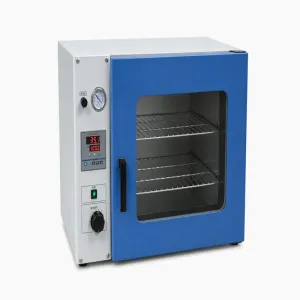
50L Vacuum Drying Oven MRX-KZ50L
Category: Coin Cell Pilot LineBrowse number: 399Number:Release time: 2026-09-24 19:37:46The Vacuum Drying Oven MRX-KZ50L is a 50-liter laboratory drying system designed for controlled heating and moisture removal under reduced-pressure conditions. Its combination of high-vacuum operation, PID temperature regulation, stainless steel construction, and configurable heating and cooling sequences makes it suitable for battery materials, powders, heat-sensitive substances, and oxygen-sensitive laboratory samples. The system can also be configured for inert gas filling when processing materials that require a controlled atmosphere.
News
Category:
No search results found!
Case
Category:
No search results found!
Video
Category:
No search results found!
Download
Category:
No search results found!
Job
Category:
No search results found!
Featured Products
-
NEWS
50L Vacuum Drying Oven MRX-KZ50L
Learn more



 Phone
Phone