

Lithium Ion Battery Coater
A lithium-ion battery coater is a highly specialized piece of equipment used in the manufacturing of rechargeable batteries. Its primary function is to apply a uniform layer of active electrode material onto a metal current collector, such as copper foil for anodes or aluminum foil for cathodes. This coating process is one of the most critical steps in battery production because it directly affects the battery’s performance, consistency, safety, and overall lifespan.In a typical production line, the coater handles slurry prepared from active materials, conductive additives, binders, and solvents. The slurry must be spread evenly across the foil with precise thickness control. Any irregularity in coating can lead to defects such as uneven capacity, poor adhesion, internal resistance issues, or reduced cycle life. For this reason, modern coating systems are designed with advanced control mechanisms that ensure high accuracy and stability during continuous operation.There are different coating methods used in lithium-ion battery manufacturing, including comma bar coating, slot die coating, and doctor blade coating. Among these, slot die coating is widely recognized for its precision and ability to deliver consistent thickness at high speed. The equipment usually includes unwinding and rewinding units, tension control systems, drying ovens, edge alignment devices, and online inspection systems. These components work together to ensure smooth processing of the electrode film from start to finish.Temperature control is another important factor in the coating and drying process. After the slurry is applied, the coated foil passes through drying sections where the solvent is removed. Proper drying helps maintain coating quality and prevents defects such as cracking, pinholes, or material separation. Advanced systems often use multi-zone ovens with adjustable airflow and temperature settings to optimize drying performance for different materials and production requirements.Automation and digital monitoring have become increasingly important in this field. Many modern coaters are equipped with sensors and software that monitor coating thickness, speed, tension, and surface quality in real time. This allows operators to make quick adjustments, reduce waste, and improve production efficiency. Some systems also support data collection and remote diagnostics, making maintenance and process optimization easier.A lithium-ion battery coater must also meet high standards for cleanliness and environmental control. Since battery electrodes are sensitive to contamination, the coating environment is often designed to minimize dust and maintain stable humidity and temperature. This helps ensure product reliability and supports the demands of high-volume manufacturing.Overall, the lithium-ion battery coater plays a vital role in battery production. It combines precision engineering, automation, and process control to produce high-quality electrodes that support energy storage applications in electric vehicles, consumer electronics, power tools, and renewable energy systems.
Products
Category:
-
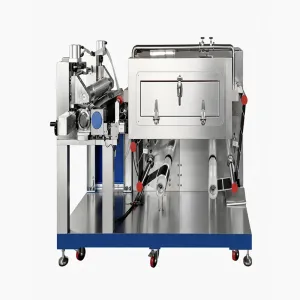
Intermittent Laboratory Electrode Coating Machine MRX-SY300J
Category: Pouch Cell Pilot LineBrowse number: 4Number:Release time: 2026-09-24 19:37:18The MRX-SY300J Intermittent Laboratory Electrode Coating Machine is a compact coating solution designed for battery material research and pilot-scale electrode development. With flexible continuous and intermittent coating modes, precision three-roll transfer technology, and controlled drying performance, it supports researchers in developing consistent lithium-ion battery electrodes and advanced energy storage materials.
News
Category:
No search results found!
Case
Category:
No search results found!
Video
Category:
No search results found!
Download
Category:
No search results found!
Job
Category:
No search results found!
Featured Products
No search results found!



 Phone
Phone