Product Introduction
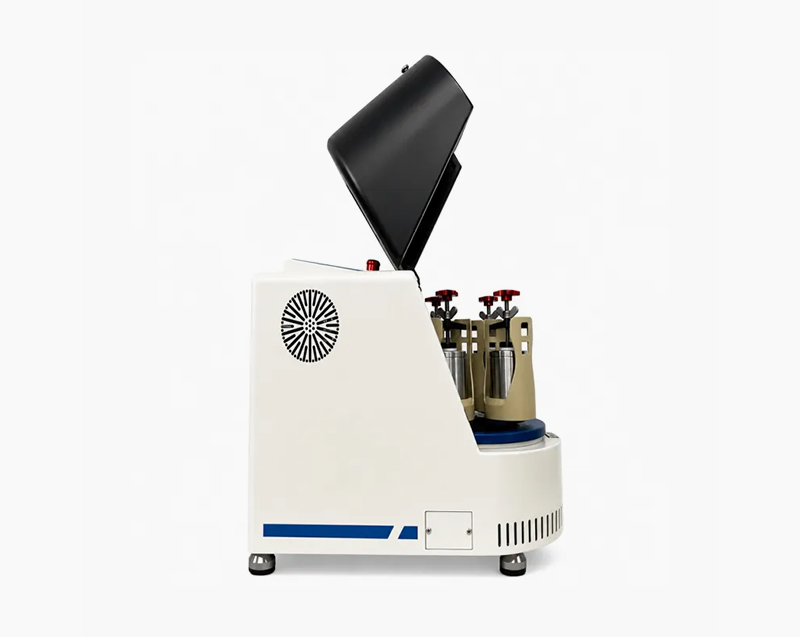
The Planetary Ball Mill MRX-XQM-1 is a compact laboratory grinding system developed for researchers who need controlled and repeatable processing of powders, particulate materials, and experimental material formulations. Rather than relying on simple rotational grinding, its planetary motion creates combined centrifugal and impact forces inside the grinding jars, allowing materials to undergo intensive size reduction, mixing, and dispersion within a relatively small laboratory footprint.
The four-station configuration enables up to four grinding jars to operate during one experimental cycle. Researchers can therefore compare different materials, grinding media, formulations, or process parameters without requiring separate runs for every sample. This makes the MRX-XQM-1 particularly useful for material screening, formulation development, and comparative laboratory studies.
A variable-frequency drive allows the grinding speed to be adjusted according to the characteristics of the material and the desired processing result. The control system also supports programmed forward and reverse operation, continuous operation, timed operation, and alternating rotation sequences. Such flexibility allows researchers to build different grinding procedures for brittle powders, ceramic materials, battery-related materials, and other laboratory samples.
The machine supports grinding jars made from stainless steel, alumina, zirconia, agate, PTFE, and other materials. The selection of jar and grinding media can therefore be matched to the chemical characteristics and contamination requirements of different experiments. Vacuum grinding jars can also be configured when processing requires a reduced-pressure environment.
With a compact structure, low center of gravity, safety interlock, and programmable operating functions, the MRX-XQM-1 is designed for practical laboratory use. It can serve research teams working on Battery Materials, ceramics, minerals, metallurgy, electronics, chemical formulations, advanced materials, and other fields requiring controlled powder preparation.
Key Specifications & Parameters
Product Name: Planetary Ball Mill
Model: MRX-XQM-1
Power Supply: Single-phase AC 220 V ±10%, 50 Hz
Rated Power: Approximately 0.75 kW
Grinding Jar Configuration: 100 mL × 4, 250 mL × 4, or 500 mL × 4
Available Jar Materials: Stainless steel, alumina, zirconia, agate, PTFE and other compatible materials
Grinding Media Options: Stainless steel, alumina, zirconia, agate, PTFE and other compatible materials
Recommended Maximum Loading: Material and grinding media should not exceed two-thirds of the jar volume
Feed Particle Size: Less than 10 mm for brittle materials; less than 3 mm for other materials
Specified Minimum Output Particle Size: Up to approximately 0.1 μm under suitable processing conditions
Revolution Speed: 50–400 rpm maximum range
Rotation Speed: 100–800 rpm maximum range
Revolution-to-Rotation Ratio: 1:2
Speed Control: Variable-frequency stepless speed adjustment
Speed Adjustment Accuracy: Approximately 0.2 rpm
Programmable Time Range: 1–999 minutes for programmed rotation sequences
Overall Dimensions: 450 × 700 × 550 mm
Net Weight: Approximately 41 kg
Core Features
Four-Jar Parallel Processing
The four-station configuration allows researchers to process multiple samples in parallel. Different materials or process conditions can be evaluated during the same operating cycle, improving laboratory testing efficiency.
Combined Planetary Motion
Each grinding jar experiences both revolution and rotation. The combined movement generates repeated impact and friction between the grinding media and material, supporting intensive laboratory-scale milling and mixing.
Variable-Frequency Speed Control
The variable-frequency control system provides flexible speed adjustment, allowing researchers to select a suitable operating condition instead of relying on a fixed grinding speed.
Programmable Forward and Reverse Operation
Forward, reverse, pause, continuous, and alternating sequences can be programmed according to the experimental process. This is useful when a material requires intermittent grinding or periodic changes in movement direction.
Multiple Grinding Jar Materials
A selection of grinding jar and media materials allows the equipment configuration to be adapted to different sample characteristics, hardness levels, chemical environments, and contamination requirements.
Vacuum Grinding Capability
Vacuum-compatible grinding jars can be selected for applications where the material needs to be processed under reduced pressure or where exposure to the surrounding atmosphere needs to be limited.
Integrated Safety Interlock
A safety switch is incorporated into the machine to prevent operation when the protective cover is open. This provides an additional layer of protection during laboratory operation.
Compact Laboratory Configuration
The low-center-of-gravity structure and compact footprint make the MRX-XQM-1 suitable for laboratories where controlled powder processing capability is required without installing a large industrial mill.
Main Functions
Fine Grinding
The MRX-XQM-1 provides intensive mechanical grinding for reducing suitable feed materials into fine particulate forms. Under appropriate material and process conditions, the specified output particle size can reach approximately 0.1 μm.
Powder Mixing
The planetary movement promotes repeated movement of the material and grinding media, allowing the machine to be used for laboratory-scale blending of compatible powders and particulate formulations.
Material Dispersion
The high-energy movement inside the grinding jars can assist in dispersing fine particles and agglomerates, making the machine useful for selected advanced-material and nanomaterial research applications.
Experimental Sample Preparation
The four-jar configuration enables researchers to prepare multiple experimental samples simultaneously, supporting comparative material studies and process optimization.
Controlled Grinding Process Development
Adjustable speed, programmable running sequences, and selectable grinding jars allow researchers to modify key process variables during material development and laboratory-scale process validation.
Specific Application Scenarios
Battery Material Research
The MRX-XQM-1 can be incorporated into battery material research for laboratory-scale powder mixing, grinding, and dispersion. It is suitable for experimental preparation of selected electrode-related materials and other battery material formulations.
Nanomaterial Development
For nanomaterial research, controlled mechanical milling can be used to reduce particle size, break up agglomerates, and improve dispersion. The MRX-XQM-1 provides adjustable operating conditions for experimental investigation.
Ceramic Material Preparation
Ceramic powders and related formulations can be processed using appropriate grinding jars and media. The choice of jar material can help researchers address different hardness and contamination requirements.
Mineral and Geological Research
The machine can be used for laboratory preparation of mineral and geological samples where controlled grinding and fine particle preparation are required before subsequent analysis.
Metallurgy and Advanced Materials
Researchers working on metallic powders, composite materials, and advanced material formulations can use the planetary milling mechanism to investigate grinding, mixing, and material dispersion behavior.
University and Corporate R&D Laboratories
The compact four-station design makes the equipment suitable for universities, research institutes, corporate laboratories, and pilot research facilities that need flexible powder-processing equipment for material development.
Frequently Asked Questions
1. What is the MRX-XQM-1 Planetary Ball Mill used for?
The MRX-XQM-1 is designed for laboratory-scale grinding, mixing, dispersion, and sample preparation of suitable powders and particulate materials. It can be used in battery materials, ceramics, minerals, metallurgy, nanomaterials, and other research fields.
2. How many samples can be processed at the same time?
The machine can operate four grinding jars simultaneously. This allows researchers to process four samples or four experimental conditions during one milling cycle.
3. What grinding jar sizes are available?
The available configurations include 100 mL × 4, 250 mL × 4, and 500 mL × 4. The selected configuration can depend on the required sample volume and experimental process.
4. What materials can be used for the grinding jars?
Available options include stainless steel, alumina, zirconia, agate, PTFE, and other compatible materials. The appropriate selection depends on the sample characteristics and contamination requirements of the experiment.
5. Can the planetary ball mill operate under vacuum?
Yes. Vacuum-compatible grinding jars can be configured when an experiment requires grinding under reduced pressure or controlled atmospheric conditions.
6. What is the smallest particle size that can be achieved?
The specified minimum output particle size can reach approximately 0.1 μm under suitable material and process conditions. Actual results depend on feed properties, grinding media, jar selection, speed, grinding time, and other process parameters.
7. Can the grinding direction be changed automatically?
Yes. The programmable control system supports forward and reverse operation as well as alternating sequences. The operator can configure timed rotation and pause periods according to the experimental procedure.
8. What is the maximum revolution speed?
The revolution speed range is specified at up to 400 rpm, while the rotation speed can reach up to 800 rpm. The actual operating speed should be selected according to the material and experimental requirements.
9. What is the recommended filling level of each grinding jar?
The combined volume of the material and grinding media should not exceed two-thirds of the grinding jar volume. Appropriate loading also depends on the material properties and selected grinding process.
10. Is the MRX-XQM-1 suitable for battery material research?
Yes. The planetary ball mill can be used for selected battery material research tasks involving powder mixing, grinding, dispersion, and laboratory sample preparation. The appropriate jar and grinding media should be selected according to the material chemistry and experimental requirements.



 Phone
Phone