Product Introduction
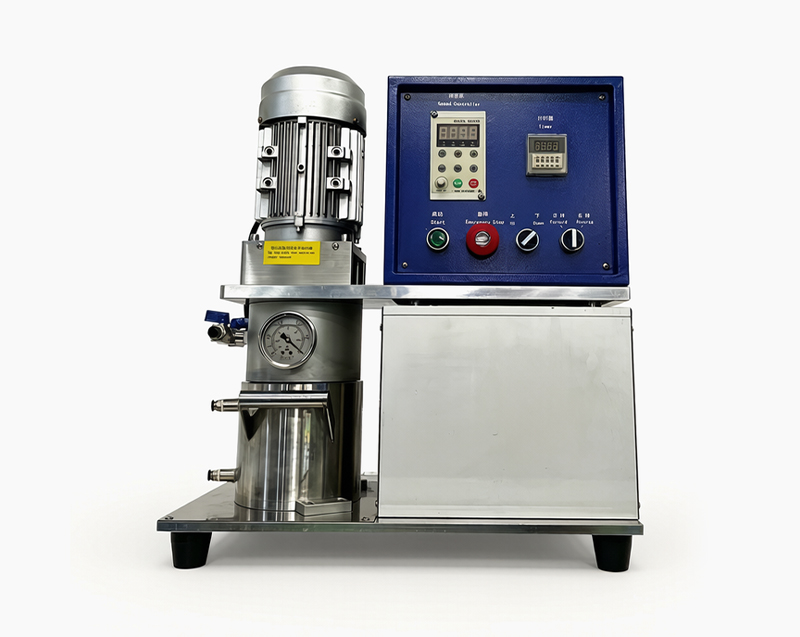
The 1L Laboratory Vacuum Mixer is a compact mixing and dispersing system developed for laboratory-scale material processing, with particular suitability for lithium-ion battery electrode slurry preparation. Designed for research environments where formulation accuracy and repeatable processing conditions are important, the machine combines vacuum mixing, variable-speed operation and programmable process control in a small-footprint configuration.
During battery material development, trapped air and inconsistent dispersion can affect slurry quality and subsequent electrode coating performance. This laboratory vacuum mixer allows the material to be processed under a controlled vacuum environment, helping minimize entrained air while promoting more uniform mixing. The system can be used for cathode and anode slurry preparation as well as the development of powder-based materials, ceramic formulations and other laboratory compounds.
The 1L working vessel is manufactured from SUS304 stainless steel and is designed for laboratory processing where cleanliness, durability and repeatability are required. A variable-frequency drive provides a mixing speed range of 0–2800 rpm, allowing researchers to adjust the mixing intensity according to material characteristics and experimental requirements. The programmable control system can also manage operating time and rotation settings, supporting repeatable experimental procedures.
Key Specifications & Parameters
The model is MRX-ZKJB-6, with a rated power of 0.75 kW and an operating voltage of 220 V. The mixing speed is adjustable from 0 to 2800 rpm through variable-frequency control. The standard effective vessel capacity is 1 L, while a 2 L vessel can be customized for applications requiring a larger laboratory batch size.
The mixing vessel uses a double-wall SUS304 stainless steel construction and has an internal diameter of approximately 106 mm with an internal height of approximately 175 mm. The upper cover is lifted by a dual-arm pneumatic cylinder system, providing convenient access to the vessel. The cover is equipped with a vacuum gauge and vacuum connection for controlled vacuum processing.
The machine measures approximately 560 × 270 × 620 mm and weighs approximately 67.5 kg. A programmable timing function allows an operating period from 0 to 99 hours to be configured, after which the equipment can automatically stop while maintaining the vacuum condition.
Core Features
The MRX-ZKJB-6 uses a precision sealing structure designed for stable vacuum retention. Under suitable operating conditions, the system can maintain a vacuum level of approximately -0.098 MPa for more than 24 hours, supporting laboratory processes that require extended vacuum holding.
A precision guide-column structure works together with pneumatic cylinder actuation to control the opening and closing of the mixing vessel. This configuration provides controlled movement of the cover and improves convenience during material loading, unloading and cleaning.
The SUS304 stainless steel vessel provides a durable processing surface for laboratory material research. Its double-wall structure is suitable for applications where controlled vessel construction and material cleanliness are important.
The dual dispersing blade configuration promotes circulation of material through the vessel, helping improve contact between different components during mixing. Variable-frequency speed control allows researchers to select different operating conditions for materials with different viscosity and dispersion requirements.
The compact geometric design reduces the equipment footprint while maintaining the functional configuration required for laboratory vacuum mixing. This makes the system practical for battery research laboratories, university laboratories and material development facilities with limited working space.
Main Functions
The primary function of the equipment is vacuum mixing and dispersion of laboratory-scale formulations. It can be used to prepare cathode and anode slurries for lithium-ion battery research, where controlled mixing conditions are important for obtaining a consistent formulation before electrode coating.
The variable-speed drive enables researchers to change mixing intensity during different experimental stages. Lower-speed processing can be used for controlled material blending, while higher-speed operation can provide stronger dispersing action when required by the formulation.
Programmable operation allows mixing time and operating parameters to be configured for repeatable experiments. This is particularly useful when researchers need to compare different formulations while keeping processing conditions consistent.
Vacuum processing helps reduce air entrainment during mixing. By limiting the presence of trapped bubbles in the slurry, the equipment can contribute to more consistent material preparation before subsequent electrode coating or other laboratory processing steps.
Specific Application Scenarios
For lithium-ion battery research, the mixer can be used during cathode and anode slurry preparation before laboratory-scale electrode coating. Researchers can adjust mixing speed and processing time according to the formulation and compare different material systems under controlled conditions.
In battery material development laboratories, the equipment can support small-batch formulation trials involving active materials, conductive additives, binders and solvents. Its 1L working capacity is suited to experimental batches where material consumption needs to remain controlled.
The machine can also be used for powder-based material mixing, ceramic formulation development and other research involving dispersion and homogenization. Its programmable operating parameters make it suitable for repeated experiments and comparative formulation studies.
For universities, battery laboratories and R&D centers, the compact configuration provides a practical solution for developing new slurry formulations before transferring promising processes to larger pilot-scale mixing equipment.
Frequently Asked Questions
1. What is the standard working capacity of the MRX-ZKJB-6?
The standard effective capacity is 1 L. A 2 L configuration can be customized when a larger experimental batch volume is required.
2. Can this vacuum mixer be used for lithium-ion battery electrode slurry?
Yes. The machine is designed for laboratory-scale mixing and dispersion and is particularly suitable for preparing cathode and anode slurries used in lithium-ion battery research.
3. What is the maximum mixing speed?
The mixing speed can be adjusted from 0 to 2800 rpm through variable-frequency control, allowing the operating intensity to be matched to different laboratory formulations.
4. Can the machine operate under vacuum?
Yes. The equipment is specifically designed for vacuum mixing. The system can achieve approximately -0.098 MPa under suitable conditions and is designed for stable vacuum retention.
5. How long can the mixing process be programmed?
The timer can be configured for up to 99 hours. After the programmed cycle is completed, the machine can automatically stop while maintaining the vacuum condition.
6. What material is used for the mixing vessel?
The standard mixing vessel is manufactured from SUS304 stainless steel, providing a durable and cleanable surface for laboratory material processing.
7. Is a customized vessel available?
Yes. In addition to the standard 1 L configuration, a 2 L vessel can be customized according to specific experimental requirements.
8. What types of materials can be processed?
The equipment can be used for battery electrode slurries, powder-based formulations, ceramic materials and other laboratory compounds that require controlled mixing and dispersion. Actual suitability should be evaluated according to material viscosity, composition and processing requirements.



 Phone
Phone